Tag: Abu Dhabi property market

  • Aldar and DMT Partner to Develop 20 Million Sqm in Abu Dhabi

    Aldar and the Department of Municipalities and Transport (DMT) have formalized a major public-private partnership to deliver integrated communities spanning more than 20 million square meters across five strategic locations in Abu Dhabi, marking one of the emirate’s most ambitious urban development initiatives.

    The agreement was signed on May 12, 2026, during the Abu Dhabi Infrastructure Summit (ADIS) 2026, with His Excellency Suhail Mohamed Al Mazrouei, Minister of Energy and Infrastructure, His Excellency Mohammed Ali Al Shorafa, Chairman of DMT, and His Excellency Mohamed Khalifa Al Mubarak, Chairman of Aldar, in attendance.

    His Excellency Abdulla Mohamed Al Blooshi, Director General of the Urban Planning and Permits Centre at DMT, and Talal Al Dhiyebi, Group Chief Executive Officer of Aldar, executed the partnership documents.

    Strategic Locations and Community Design

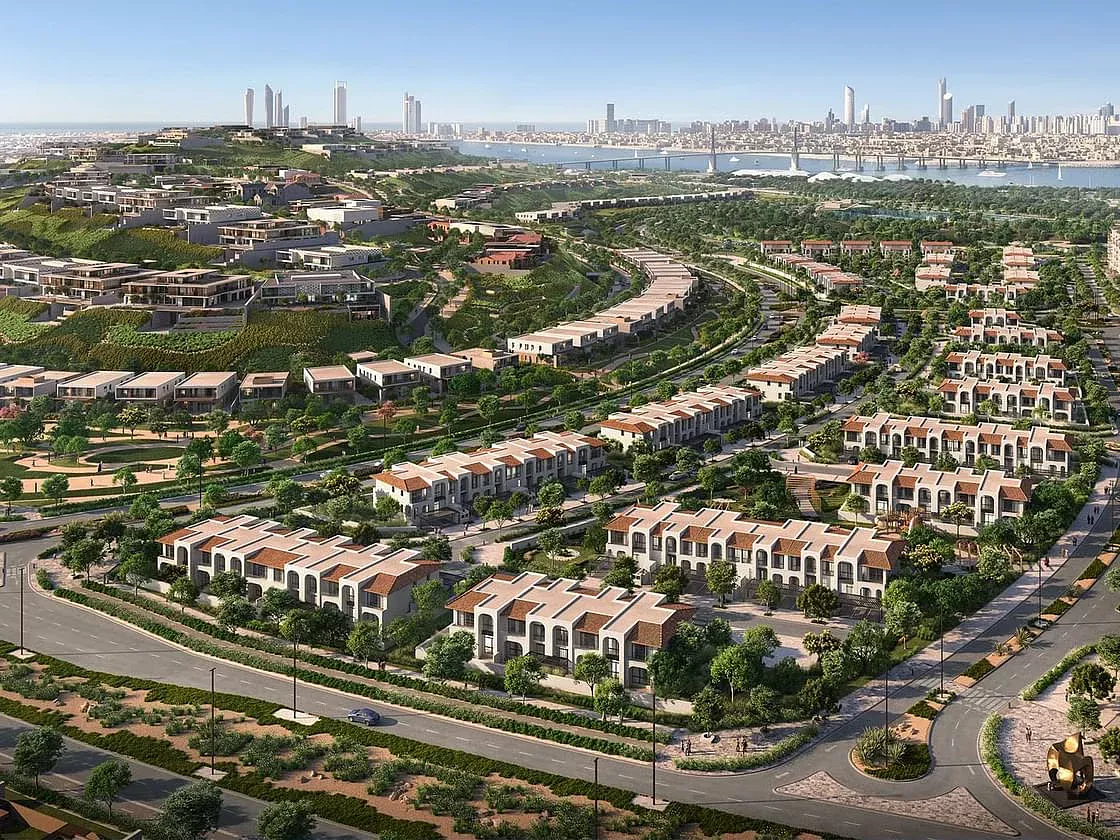
    The new communities will be developed at Muwaylih, Mussafah, Al Zahiya, and Al Faya, combining residential, retail, educational, and lifestyle offerings within walkable neighborhoods featuring green public spaces and connectivity to Abu Dhabi’s transport networks.

    The collaboration directly supports the emirate’s urban development and housing priorities, including the expansion of the Value Housing Program, a DMT-led initiative increasing access to high-quality, affordable rental housing in Abu Dhabi.

    “This strategic partnership marks an important step in shaping Abu Dhabi’s next phase of urban growth. As the emirate continues to attract residents, businesses and investment, there is a growing need for thoughtfully planned destinations that expand housing choice across multiple market segments while enhancing quality of life,” said Talal Al Dhiyebi, Group Chief Executive Officer of Aldar.

    Al Dhiyebi emphasized that the scale and breadth of these projects reflect Aldar’s strong conviction in the long-term fundamentals of Abu Dhabi’s real estate market and continued confidence in the emirate’s economic growth trajectory.

    Value Housing Program Expansion

    The partnership marks a significant expansion of the Value Housing Program, building on a recently announced commitment to develop two integrated communities in Mohamed Bin Zayed City and Baniyas that will deliver 9,000 residential units to Abu Dhabi’s rental market.

    These communities are designed to offer walkable neighborhoods, green public spaces, schools, retail and gathering places, connected to the wider city and built around the lifestyle needs of residents. Strategically located along major road networks, each destination will offer seamless connectivity across Abu Dhabi while fostering a strong sense of place and belonging.

    “This partnership with Aldar represents a new model for Abu Dhabi’s urban development, one that brings together strategic master planning, private-sector execution capability and government oversight to deliver transformational growth,” said His Excellency Abdulla Mohamed Al Blooshi, Director General of the Urban Planning and Permits Centre at DMT.

    Al Mihsinah Island Activation

    In a landmark announcement, Aldar and DMT revealed plans to activate Al Mihsinah Island for the first time, creating a waterfront community that combines natural coastal surroundings with thoughtfully planned residential neighborhoods and lifestyle amenities.

    The development will offer a living experience that blends wellness, tranquility and connectivity within a waterfront setting, representing a new benchmark for coastal community development in the capital.

    New Model for Urban Development

    The agreement represents a new model for urban development in the emirate, aligning housing accessibility, community building and long-term economic growth within a single, coordinated framework. DMT contributes land while Aldar serves as master developer, combining public-sector land stewardship with private-sector development expertise.

    The partnership is a direct expression of Abu Dhabi’s urban development strategy, placing integrated community planning, housing accessibility and long-term liveability at its core. Aldar will draw on its extensive expertise in delivering iconic destinations such as Saadiyat Island, Yas Island and Al Raha Beach.

    The announcement comes as Abu Dhabi’s residential market continues to demonstrate strong momentum, with transaction volumes remaining elevated and investor confidence sustained by the emirate’s robust economic fundamentals and strategic infrastructure investments.

  • Abu Dhabi Property Prices Jump 6.4% in Q1 2026

    The capital’s residential sector sustained its positive momentum through the first quarter of 2026, with capital values showing faster growth compared to the prior quarter, according to ValuStrat’s latest market report published on May 8, 2026.

    The ValuStrat Price Index (VPI) for Abu Dhabi’s freehold residential properties climbed to 148 points in Q1 2026, reflecting a 6.4% quarter-on-quarter increase and a robust 17.8% year-on-year rise—clear signs of acceleration from the previous period.

    Apartments drove the surge, with values up 10.4% quarter-on-quarter and 22.7% year-on-year, while villas saw steadier advances of 2.7% quarterly and 13.4% annually. Strongest results appeared in mature communities offering immediate inventory availability.

    The analysis attributes this momentum partly to Abu Dhabi’s more advanced stage in the real estate cycle relative to Dubai, combined with relatively affordable pricing that keeps attracting end-user buyers. This resilience holds firm even amid a regionally uncertain environment.

    “While geopolitical tensions have sparked some caution across the UAE, no substantial effects on Abu Dhabi’s property market have emerged so far,” ValuStrat noted in the report.

    Supply dynamics further bolstered prices, with controlled delivery rates keeping conditions favorable. Transaction activity during the quarter likely faced headwinds from seasonal elements like Ramadan and Eid celebrations, plus remote work trends, homeschooling, and unfavorable weather.

    Rental trends stayed even-keeled, with the residential rental VPI holding steady quarter-on-quarter at 128.1 points but advancing 5.9% annually. Consistent rents paired with 88.1% occupancy underscore a balanced leasing landscape.

    The report describes Abu Dhabi’s office sector as solid, with listing sales prices and rents posting both quarterly and yearly gains, fueled by high occupancy. The industrial market also held steady, showing flat quarterly prices alongside double-digit annual growth, while rents kept rising in most areas.

    Given the UAE’s real estate dynamics, Abu Dhabi and Dubai don’t always sync perfectly, but they typically align on overarching trends over longer periods. Consequently, any lasting changes in market dynamics could take time to fully reach the capital, according to the ValuStrat analysis.

    The capital’s performance mirrors broader regional strength, with transaction volumes rebounding in April and the emirate posting its second-strongest quarter on record earlier this year.

  • Abu Dhabi Residential Market Posts Second-Strongest Quarter on Record

    Abu Dhabi Residential Market Posts Second-Strongest Quarter on Record

    The capital’s property sector maintained robust momentum through January and February before moderating in March as regional geopolitical tensions, Ramadan observance, and school holidays influenced activity levels.

    Off-plan sales continued to dominate the market in Q1 2026, accounting for 81 percent of all transactions, up from 80 percent in Q4 2025. Demand was supported by major launches, including Manchester City Yas Residences by Ohana Development, which generated AED6 billion in sales within 72 hours.

    Apartment activity reached unprecedented levels, with a record 5,200 apartment transactions in the quarter, representing 73 percent of all sales, up from 67 percent in 2025. This marked the third consecutive quarter with apartment volumes above 4,000.

    Average sales rates across Abu Dhabi increased sharply during the period. Off-plan rates rose 39 percent quarter-on-quarter, from AED16,540 per square meter at the end of 2025 to AED23,067 per square meter in Q1 2026. The ready market also improved, with average rates rising 2.66 percent to AED15,480 from AED15,087 in Q4 2025.

    “The market showed remarkable resilience, delivering near-record transaction volumes in Q1 despite regional geopolitical developments and seasonal factors,” said Ali Ishaq, Head of Residential Agency Abu Dhabi at Savills Middle East.

    March showed a shift in off-plan market composition, with resale off-plan transactions rising from 4 percent to 15 percent of total activity, indicating growing investor-led activity and reassignment transactions. Monthly transaction volumes in March declined 16 percent month-on-month, though reporting lags may not fully capture underlying trends.

    Developer confidence remained strong in Q1, with approximately 20 projects launching around 4,000 units, 80 percent of which were apartments, compared with 3,400 units launched in Q4 2025. Modon Properties launched Tara Park on Al Reem Island in March, demonstrating resilience despite the uncertain backdrop.

    Key completions during the quarter included Fay Al Reeman Phase 2 and The Gate Residence in Masdar City. Q1 2026 accounted for 35 percent of full-year 2025 transaction volumes, underlining the sustained depth of demand across the market.

    Ishaq noted that underlying demand fundamentals remain intact, with supply constraints, limited near-term handovers, and continued investment in major infrastructure and cultural assets supporting a strong medium-term market case.

    The emirate’s broader growth story, supported by ADGM’s expansion, new cultural attractions on Saadiyat Island, and the opening of Disneyland Abu Dhabi, is expected to keep driving wealth migration and prime market demand over the medium term. The UAE’s ultra-wealthy population growth continues to underpin luxury residential demand across the capital.

    Savills cautioned that headline figures should be read with consideration, as transaction data, especially in March, may reflect deals initiated in January and February and may not yet fully capture current market conditions shaped by regional developments.

  • UAE Real Estate Records Strong 2025 Growth as Abu Dhabi Leads

    UAE Real Estate Records Strong 2025 Growth as Abu Dhabi Leads

    The year marked a defining period characterized by strong transactional activity, sustained developer confidence and policy-backed market growth. While all emirates recorded positive performance, Abu Dhabi emerged as a clear standout, supported by record sales volumes, rising end-user participation and growing international investor interest.

    Abu Dhabi Delivers Record Performance

    Abu Dhabi delivered one of its strongest residential real estate market performances on record in 2025, with transactions exceeding 21,000 units. Off-plan sales accounted for a growing share of activity, with 15,000 transactions, while completed unit sales reached nearly 6,000.

    The emirate added 7,000 residential units in 2025, complemented by record-breaking launch volumes that signal renewed developer confidence. Construction activity was further supported by the recommencement of several previously on-hold projects, particularly within established communities such as Al Reem Island.

    The year saw the highest concentration of branded and lifestyle-led development launches to date, many reaching sell-out status shortly after release. Separately, Abu Dhabi’s housing authority announced approximately 40,000 housing units and residential plots for UAE nationals.

    Leasing activity remained firmly positive, with high occupancy levels maintained across the Investment Zones. Prime and high-end apartments increased by 10 to 25 percent, depending on the community, while mid-quality apartments saw growth of 7 to 35 percent. The villa segment recorded average increases of 5 to 10 percent overall, with prime communities outperforming at 10 to 15 percent.

    The office market recorded its strongest performance in over a decade, driven by limited availability of premium space, corporate expansion and rising demand for flexible, high-quality workplaces. Several Grade A assets approached full occupancy, including Aldar’s Quartz Tower.

    Dubai Records Historic Completion Volumes

    Dubai remained a global focal point for real estate activity, recording the highest volume of residential completions in its history during 2025. The emirate delivered approximately 37,950 apartments and 9,700 villas, representing the highest residential delivery volume on record.

    The off-plan segment continued to underpin sales activity, supported by a steady flow of new launches and increasingly flexible payment structures. Well-positioned and competitively priced projects continued to perform strongly.

    In the rental market, growth moderated as affordability considerations became more prominent. The introduction of the Smart Rental Index in early 2025 played a pivotal role in guiding renewal negotiations, enhancing transparency and supporting a gradual stabilization of rental growth.

    The Dubai office sector continued its growth phase, characterized by substantial increases in demand, rising occupancy levels and rental rates, particularly for Grade A and well-located assets. Commercial supply was limited in 2025, with less than 280,000 square feet of office space delivered. However, new supply is expected to pick up significantly in 2026 with approximately 1.7 million square feet anticipated for handover.

    Northern Emirates Gain Momentum

    Across the Northern Emirates, 2025 saw accelerating development momentum and rising investor interest. A growing pipeline of residential, hospitality and mixed-use projects reflects improving confidence in the region’s long-term prospects, supported by government initiatives, infrastructure investment and tourism growth.

    Sharjah and Ras Al Khaimah continued to anchor activity, while Ajman recorded improving traction among both end-users and investors, supported by competitive pricing and improving project quality.

    Residential supply across the Northern Emirates is expected to become increasingly visible in 2026, as a growing number of developments transition into active handover phases. Approximately 12,900 residential units are forecast for completion, with delivery activity primarily concentrated in Sharjah, followed by RAK and Ajman.

    Policy Initiatives Support Market Growth

    Several major policy initiatives underpinned real estate market confidence throughout 2025. These include the continued implementation of formal rental index frameworks in Abu Dhabi, Dubai and Sharjah, the launch of Dubai’s First-Time Home Buyer Program in July 2025, ongoing housing initiatives in Abu Dhabi, continued regulatory reforms, digitalization of transactions and confirmation that Etihad Passenger Rail services are scheduled to commence operations in 2026.

    With 7,000 units scheduled for completion in Abu Dhabi and sustained delivery across Dubai and the Northern Emirates, the UAE real estate market is positioned for continued growth supported by disciplined development, policy frameworks and strong fundamentals.

  • Abu Dhabi Expats Drive 62% of Home Sales as Ownership Trend Accelerates

    Abu Dhabi Expats Drive 62% of Home Sales as Ownership Trend Accelerates

    New data released by the Abu Dhabi Real Estate Centre confirms that resident expatriates and non-resident foreign buyers dominated the capital’s residential market in 2025, collectively representing 62% of all unit sales and reshaping demand patterns across the emirate.

    The report found that nearly 69% of growth in residential unit sales between 2022 and 2025 was driven specifically by resident foreign buyers—expatriates who live and work in Abu Dhabi and are increasingly choosing ownership over long-term renting.

    Overall real estate transaction values reached Dh142 billion in 2025, up 44% year-on-year, with residential sales rising 67% to Dh76 billion. Foreign direct investment into real estate stood at Dh8.2 billion, with buyers from more than 100 nationalities participating.

    Ben Crompton, founding partner at Crompton Real Estate Agents, said the figures reflect a fundamental shift in Abu Dhabi’s buyer base and its growing appeal to international capital.

    “Abu Dhabi’s real estate market has historically had a smaller investor base and opened later to expatriate buyers. But that narrative is now rapidly evolving, with international capital flowing into the market in unprecedented numbers,” Crompton said.

    He noted that the trend raises a broader question about how Abu Dhabi is now being viewed globally. “Is Abu Dhabi becoming a genuine global property investment destination—not just a local one?”

    For years, the emirate was seen as a more conservative and measured market, with expatriate ownership initially limited to designated investment zones from the mid-2000s. That perception has changed visibly in recent years.

    “International attention is no longer just regional,” Crompton said. “Buyers from established investor markets such as the UK, China, India, Russia and across Europe are now actively looking at Abu Dhabi.”

    Cultural and Lifestyle Appeal

    One of the strongest drivers behind the shift has been the emirate’s expanding cultural, entertainment and lifestyle offering. Projects such as Louvre Abu Dhabi, teamLab Phenomena Abu Dhabi and the upcoming Guggenheim Abu Dhabi have helped reposition the city internationally, while major leisure and entertainment developments have broadened its appeal beyond the Gulf.

    “These projects generate brand recognition far beyond the region,” Crompton said. “They make Abu Dhabi more recognisable as a place to live, visit and invest, and collectively signal that the city has developed strong global cultural and lifestyle pull.”

    Regulatory Reforms Build Confidence

    Legal and regulatory reforms have also played a key role in building confidence among foreign buyers, Crompton added.

    “Property investment carries risks if it’s not properly regulated,” he said. “Abu Dhabi has addressed this by imposing stricter requirements on developers, brokers and valuers, and enforcing escrow protections tied to construction milestones.”

    He highlighted the expansion of the Abu Dhabi Global Market to cover prime areas such as Reem and Maryah Islands as a particularly important step. Operating under English common law with its own courts, ADGM offers a legal framework that many international buyers already understand and trust.

    Developer Outreach Widens Buyer Pool

    Developer outreach has further widened the buyer pool. Crompton noted that early phases of some residential communities were once dominated by buyers from within the UAE, while more recent launches have attracted a far more international audience.

    “Launch statistics from flagship projects like Fahid Island show that roughly two-thirds of buyers came from overseas,” he said, describing it as “a dramatic shift.” He added that developers such as Aldar Properties have expanded international roadshows and broker networks across Asia, Europe and North America, significantly increasing global awareness of Abu Dhabi’s market.

    The change in buyer behaviour is already being felt on the ground. Crompton said resident expatriates are increasingly viewing ownership as a long-term lifestyle and financial decision, while non-resident investors are being drawn to Abu Dhabi’s narrative of stability, culture and quality of life.

    “Not long ago, selling a unit could be a challenge, with buyers highly price-sensitive and cautious. Today, capital appears to be moving more freely, and investors from around the world are participating with confidence,” Crompton said.

    “So, are buyers increasing from outside the emirate? The data says unequivocally yes—and at a pace that is reshaping the market’s identity and potential.”