Category: Dubai

  • Ras Al Khaimah Reports 25% Rent Surge, 32% Apartment Price Growth

    Ras Al Khaimah Reports 25% Rent Surge, 32% Apartment Price Growth

    The emirate’s residential market experienced unprecedented momentum throughout 2025, with prime apartment sales reaching AED 2,428 per square foot—the highest level in the current cycle. Growth was concentrated across coastal developments including Al Marjan Island, Al Hamra, and Mina Al Arab, while villa prices averaged AED 1,211 per square foot, marking an 11% annual increase.

    The performance comes amid broader economic resilience across the UAE, where non-oil sector growth and strong foreign direct investment have offset softer oil projections. RAK has capitalized on this environment through major industrial and tourism infrastructure, most notably the $5.2 billion Wynn Al Marjan Island development.

    “The residential and hospitality sectors have entered a new phase of growth driven by global brand partnerships and a deepening pool of international buyers,” said Matthew Green, Head of Research at CBRE MENA.

    The emirate’s business environment remained robust, with more than 19,000 new companies registered through RAKEZ alone, supporting steady employment growth and reinforcing sustained real estate demand.

    Rental Market Dynamics

    Apartment rents surged nearly 25% year-on-year, supported by new supply deliveries in key communities. Villa rents remained broadly stable, though prime locations like Mina Al Arab recorded notable increases. CBRE noted that rapid escalation in prime pricing has created a growing divergence between sales and rental values, a trend expected to moderate as new inventory reaches completion in coming years.

    Luxury Segment Expansion

    High-profile project launches including Mondrian Beach Residences and Jacob & Co Residences continue to elevate the emirate’s luxury positioning. Despite a year-on-year reduction in overall sales volume due to mid-market launches in districts like RAK Central, the market witnessed a strong rebound in the fourth quarter, underscoring ongoing demand depth.

    Record Hospitality Performance

    The hospitality sector delivered standout results, with visitor arrivals reaching an all-time high of 1.36 million during 2025. Key metrics showed broad-based improvement: occupancy rose 4.6 percentage points, Average Daily Rate increased 6.6%, and RevPAR surged 11.5% year-on-year.

    RAK’s hotel inventory now exceeds 9,000 keys, with a development pipeline for 2026–2030 planning more than 9,500 additional keys. Notably, 92% of planned inventory falls within the five-star category, as international operators deepen their presence and new entrants diversify the luxury landscape.

    Market Outlook

    As the delivery cycle accelerates from 2027 onwards, RAK is positioned to solidify its standing as one of the UAE’s most dynamic real estate markets. The emirate’s low inflation environment, combined with its strong sovereign rating and record greenfield investment levels, provides a solid foundation for continued growth.

    The performance aligns with broader trends across the region, where GCC real estate markets maintain upward momentum through the first half of 2026, driven by easing monetary conditions and infrastructure investment. The UAE is also set to add 390,000 residential units by 2030, reflecting one of the region’s largest residential expansion cycles.

  • Saudi Giga Projects Redefine Urban Planning, Says AtkinsRéalis CEO

    Saudi Giga Projects Redefine Urban Planning, Says AtkinsRéalis CEO

    The Gulf region is undergoing one of the world’s most ambitious infrastructure investment cycles, but according to Campbell Gray, CEO of AtkinsRéalis Middle East, the defining characteristic is no longer magnitude—it’s maturity.

    Over the past five years, the region has transitioned from delivering landmark projects to constructing integrated systems designed to support long-term economic transformation. Saudi Arabia’s giga projects exemplify this evolution, redefining city-making rather than simply expanding it.

    “In recent years, the region has shifted from delivering individual projects to building fully integrated systems and approaches that support long-term economic transformation. National visions now provide a clear sense of direction, aligning investment, delivery models, and expected outcomes,”

    Gray explains.

    From Standalone Projects to Urban Ecosystems

    Giga projects across Saudi Arabia and the UAE are now conceived as interconnected ecosystems, raising expectations for integration, governance, and delivery discipline. Sustainability has become a baseline requirement, and digital tools now anchor how risk, sequencing, and performance are managed.

    “The key difference now is the necessity for clearly defined brief and basis of design leading to a development investment that provides a demonstrable and tangible return,”

    Gray says.

    This emphasis on measurable outcomes marks a departure from earlier rapid-growth phases. Governments and developers now prioritize front-end clarity, lifecycle performance, and return on investment over project completion timelines alone.

    The region’s accelerated localization agenda is reshaping procurement and supply chains, creating clearer pathways for national participation. These changes signal a more mature development environment increasingly focused on measurable results rather than activity alone.

    Redefining City-Making in Saudi Arabia

    While Saudi Arabia’s giga projects are frequently discussed in terms of scale, Gray argues their real impact lies in how they are redefining urban planning fundamentals.

    “These programmes reflect a deeper understanding that cities are dynamic systems that have evolved over decades. Planning now begins with how people will move, live, work, and interact with their environment, as well as how places will perform socially and environmentally over time,”

    he notes.

    This systemic approach influences mixed-use design, mobility integration, and long-term asset stewardship. Development companies are increasingly structured as long-term custodians rather than short-term delivery entities.

    Digital integration has become essential, enabling thousands of decisions and interfaces to be managed with clarity and consistency. Once operational, these cities rely on real-time data to optimize energy use, transport, and public services, creating urban environments that adapt to changing needs and continue generating value long after construction completes.

    Industrialized construction methods, local manufacturing investment, and performance-driven commercial frameworks are becoming standard delivery model features.

    Economic Diversification Drives New Demands

    Economic diversification across the Gulf is creating new asset classes, from cultural districts to innovation hubs, reshaping demand for engineering and advisory services.

    “Diversification is driving a clear shift toward integrated and multidisciplinary thinking. Cultural districts, innovation hubs and creative clusters need planning, engineering, mobility, landscape, digital and ESG considerations to be shaped as a single coherent strategy rather than separate workstreams,”

    Gray says.

    He highlights the growing importance of upstream advisory work, noting that clients now require technical advisory expertise upfront to ensure vision can be matched in delivery around return on investment, quality, cost, and program.

    Saudi Arabia’s SAR81 billion commitment to cultural infrastructure underscores this shift, with culture targeted to contribute approximately 3% to GDP. Consultants are increasingly expected to stay engaged across the full asset lifecycle, connecting policy ambition with delivery discipline.

    Sustainability as Baseline Expectation

    Sustainability in the Gulf is no longer a differentiator—it’s a baseline expectation. However, the definition has evolved significantly.

    “Sustainability is now viewed through the lens of long-term resilience. Clients want assets that reduce emissions, manage climate risks, and maintain strong performance over many decades,”

    Gray explains.

    Whole-life carbon analysis, circularity, water efficiency, and extreme heat adaptation are now embedded in project briefs from the outset. Nature-based solutions are gaining traction alongside engineered resilience measures.

    Importantly, performance is increasingly evaluated during operation, not just at handover, showing how deeply sustainability is now embedded in everyday decision-making.

    Speed with Discipline

    While the Gulf remains known for pace, Gray believes the narrative has shifted from speed at any cost to speed with discipline.

    “The region has moved beyond the mentality of building fast at any cost. The prevailing approach now is to build fast while safeguarding long-term value,”

    he says.

    Front-end planning, scenario modeling, and closer contractor collaboration are becoming essential. A key development is much closer working relationships with contractors and clients, adopting a joint problem-solving approach.

    However, challenges remain. Governments are increasingly assessing projects based on whole-life value rather than upfront cost or delivery timelines alone, though Gray notes this approach is still immature, and lowest cost often still wins, which rarely creates value for money.

    Digital assurance tools are playing a crucial role in managing complexity at scale, offering real-time risk visibility while maintaining quality and resilience.

    Digital Tools Reshape Decision-Making

    Across the built environment, digital technology is fundamentally reshaping how decisions are made and assets are managed. Digital twins and advanced modeling enable teams to test scenarios and understand impacts well before construction begins.

    AI-enabled delivery tools are enhancing predictability and productivity, while integrated data platforms allow urban systems—energy, mobility, and public services—to be managed proactively.

    This shift from project-level decision-making to system-level planning is creating more resilient, efficient cities and enabling governments to allocate resources with far greater confidence.

    Setting Regional Benchmarks

    Gulf cities continue to draw on global best practices, particularly in transit-oriented development and low-carbon planning. However, the region is increasingly setting its own benchmarks through the pace and scale of implementation.

    “The focus has shifted from iconic individual assets to integrated citywide strategies that connect land use, mobility, climate resilience, and quality of life,”

    Gray notes.

    Major waterfront regeneration projects, heritage districts, and large-scale public realm initiatives demonstrate how global expertise can be adapted to local ambition, similar to emerging master-planned developments across the region.

    Future Focus: Systems Over Projects

    Looking ahead, Gray believes the next phase of growth will center on systems that support diversified, knowledge-based economies.

    Green and resilient infrastructure will be essential as populations expand and climate pressures intensify. Social infrastructure and mixed-use districts will play central roles in developing talent and strengthening quality of life.

    Mass transit will play a defining role. With rapid population growth, how people move around cities will significantly impact how they work, play, and live—a fundamental consideration for regional developers. For the first time, commuter times will play a much bigger part in where and how residents spend their time.

    The emphasis on logistics and industrial infrastructure will reinforce the Gulf’s role as a global trade and innovation hub, while experience-led cultural destinations emerge as critical pillars of diversification.

    Across all sectors, a consistent theme is emerging: the focus will be on long-term performance, integration, and value creation rather than short-term delivery milestones, reflecting broader trends in GCC real estate market evolution.

    For the Gulf’s built environment, scale remains impressive. But maturity, not magnitude, is increasingly the defining characteristic of this infrastructure cycle.
  • UAE Industrial Real Estate Market Grows Amid Strong Trade Demand

    The country is strengthening its position as a global logistics and connectivity hub through an ambitious array of infrastructure projects, including advanced rail networks, cutting-edge transportation technologies, urban mobility solutions, and integrated logistics platforms.

    Trade Boom Fuels Warehousing Demand

    The UAE’s foreign trade account has been rising steadily, with imports witnessing a 15.6% increase and non-oil exports recording substantial year-on-year growth of 41.3% in Q1 2025. Re-exports totaled Dh630 billion, reinforcing structural demand for warehousing and logistics.

    “The UAE’s industrial landscape is witnessing a significant transformation. As this market matures, an accelerated focus on technological efficiency, sustainability and human-centric design will be crucial to meet the diverse needs of international occupiers and optimize new logistical models,” said Taimur Khan, Head of Research, MEA, JLL.

    Khan added that streamlined, long-term trade policies and GCC-wide government infrastructure development are driving sustained demand for specialized warehousing and logistics solutions, reinforcing the UAE’s position as a regional gateway.

    Near-Full Occupancy in Established Zones

    Warehousing across core UAE hubs remains tight, with established industrial zones across Dubai experiencing near-full occupancy rates. Landlords are implementing significant rental increases in response to market conditions, creating a spillover effect extending to Abu Dhabi and the Northern Emirates.

    The Al Maktoum International Airport expansion is shifting the economic focal point toward Dubai South, while smart-mobility targets and the RTA-Dubai Land Department data-sharing partnership are improving transparency and enabling faster decision-making.

    In Abu Dhabi, as the Khalifa Economic Zones reaches operational maturity, it is diversifying into new development categories, bringing significant new industrial stock to the market. These range from specialized storage facilities to integrated business districts, including the Aquaculture Zone, Rahayel Auto City, Metal Park, Al Ain Business Park, and new logistics parks.

    Investment Yields Remain Attractive

    The industrial real estate market’s unprecedented growth has attracted sizeable investment deals from major regional and international players. All grades, including Prime, A & B, maintained consistent yield ranges over the past two years, with slight compression evident in Q4 2025 for Prime and Grade A assets.

    “Robust macroeconomic fundamentals, including a growing non-oil economy, population and enhanced business competitiveness, are driving demand and resilience in the UAE’s industrial market,” said Abhishek Mittal, Head of Industrial, JLL.

    Consistent returns ranging from 7.25% to 8.25% across both Dubai and Abu Dhabi indicate a mature, low-risk market with strong fundamentals, making it ideal for income-focused strategies.

    Economic Fundamentals Support Growth

    The UAE’s GDP is forecast to grow 5.1% in 2026, reaching around Dh2.1 trillion by 2028. Population projections indicate growth rates moderating from 2.9% in 2025 to 1.1% by 2030, when the population is expected to reach 12.5 million.

    Trade flows remain robust, while expanding e-commerce drives demand for modern warehousing, distribution centers, and last-mile logistics. This growth is reinforced by long-term industrial policy, including the federal Operation 300bn program, Abu Dhabi’s Industrial Strategy 2031, and Dubai Industrial Strategy 2030.

    Looking ahead, JLL expects market momentum to remain resilient as the non-oil economy expands and trade-led activity deepens. Occupiers will prioritize flexibility and automation-ready, energy-efficient facilities, while investors are expected to remain selective, favoring institutional-grade platforms as infrastructure investment broadens viable industrial nodes across the UAE.

  • UAE to Add 390,000 New Homes by 2030

    UAE to Add 390,000 New Homes by 2030

    Dubai will account for the majority of this pipeline, with apartment-led mixed-use communities continuing to dominate new launches, while Abu Dhabi focuses more on premium villas and waterfront neighbourhoods.

    Across the broader Gulf region, residential supply is expected to increase from approximately 6.26 million units in 2025 to 7.28 million units by 2030, with Saudi Arabia and the UAE accounting for the bulk of new supply. Saudi Arabia’s residential stock is estimated to grow by 499,000 units during this period, reaching 3.45 million by 2030, driven by giga projects in Riyadh and Jeddah.

    “Dubai has led this transformation, establishing itself as a global metropolis fuelled by foreign ownership, massive infrastructure investments and ambitious strategies,” said Sameena Ahmad, Managing Director, Alpen Capital.

    According to Ahmad, the region’s real estate industry is expected to witness steady supply across residential, commercial, hospitality and retail segments over the next few years, largely supported by continued government spending and investments in world-class infrastructure.

    What This Means for Rental Prices

    A supply increase of this scale typically shifts the balance between landlords and tenants. The report stated that supply growth in the GCC is becoming more “structured” and increasingly aligned with demand rather than speculative expansion, which could reduce the risk of sharp corrections.

    However, with nearly 390,000 additional homes entering the UAE market over five years, rental growth is likely to moderate if deliveries outpace new household formation. The study highlights that population growth, expatriate inflows and urbanisation remain strong demand drivers.

    The UAE’s population has surpassed 11 million in 2025, according to Worldometer, with continued inflow of expatriates and high-net-worth individuals supporting both mid-tier and luxury segments. If those inflows remain steady, the additional supply may ease pressure without triggering a widespread rent correction. But in sub-markets where deliveries cluster heavily, tenants could gain greater negotiating power.

    Property Price Outlook

    The report from Alpen stated that supply across the GCC is entering a more disciplined phase, with greater emphasis on mixed-use developments, asset quality and long-term livability.

    “Over the coming years, we expect supply–demand dynamics across the GCC to become more balanced. Large-scale developments are being phased more strategically, with a clear emphasis on quality, mixed-use formats, and demand-led execution,” said Sharmin Karanjia, Executive Director, Alpen Capital.

    Karanjia noted that development trends are shifting towards master-planned, sustainable, and technology-enabled communities focused on long-term liveability. While certain sub-markets may experience short-term oversupply pressures, well-located and high-quality projects are likely to continue seeing strong absorption and pricing support.

    “As major development zones reach operational maturity, investors will have a broad base of high-quality assets maintaining interest from both regional and international buyers,” Sharmin added.

    Future Development Drivers

    High disposable incomes, steady population growth, expatriate inflows, and a favourable tax environment will remain key demand drivers across the region. Future development pipelines will feature mixed-use projects, enhanced asset quality, sustainability, and the integration of residential, commercial and lifestyle components.

    In the commercial segment, office supply across the GCC is estimated to expand from 33.3 million sqm in 2025 to 42.4 million sqm by 2030, with over 65 per cent of new supply delivered in Saudi Arabia and the UAE, according to the existing pipeline.

    The findings align with broader market trends, as GCC real estate markets sustain growth momentum driven by infrastructure investment and easing monetary conditions. Meanwhile, property buyers shift to value-driven approaches, prioritizing developer credibility and rental yields over speculative gains.

  • GCC Real Estate Markets to Sustain Growth Momentum in H1 2026

    GCC Real Estate Markets to Sustain Growth Momentum in H1 2026

    Kuwait-based investment firm Markaz has released its Real Estate Outlook for H1 2026, forecasting sustained growth across GCC property markets despite evolving macroeconomic dynamics. The report identifies higher oil production, non-oil sector expansion, continued government infrastructure spending, and policy rate cuts as key drivers supporting borrowing and investment activity across residential, commercial, and industrial segments.

    UAE Market Expected to Peak in First Half

    The UAE real estate sector demonstrated exceptional performance through the first three quarters of 2025. In Dubai, transaction values surged 28.3 percent year-on-year to AED554.1 billion, while Abu Dhabi recorded AED58 billion in total sales—a remarkable 75.8 percent annual increase. Transaction volumes in the capital also climbed 42.3 percent to 15,800 deals.

    Dubai continues to offer compelling investment returns, with rental yields standing at 7.47 percent as of June 2025, significantly outperforming major global markets including Singapore, New York, and London. This aligns with recent data showing that long-term UAE renters are turning homeowners amid competitive pricing and flexible payment plans.

    While acknowledging concerns about market sustainability given three consecutive years of exceptional performance, Markaz emphasized that strong fundamentals reduce the likelihood of a sharp correction. The firm forecasts the UAE market could peak in H1 2026, characterized by steady growth in both prices and rental rates across Dubai and Abu Dhabi.

    The outlook reflects broader shifts in buyer behavior across the Gulf, with investors increasingly prioritizing developer credibility, rental yields, and long-term stability over speculative gains.

    Saudi Arabia Maintains Accelerating Phase

    Saudi Arabia’s real estate sector remained in an accelerating phase through H2 2025, propelled by robust residential activity and constrained office market conditions. Residential transactions increased 17.9 percent quarter-on-quarter in Q3 2025, with Riyadh and Jeddah leading price appreciation.

    The Kingdom’s office segment faces extreme supply constraints, with Riyadh vacancy rates near zero, supporting prime rent growth of 7.3 percent year-on-year. Demand stems from the Regional Headquarters Program and expanding healthcare and technology sectors.

    Despite a fiscal deficit projected at 3.7 percent of GDP for both 2025 and 2026, increased capital expenditure under Vision 2030 continues supporting construction activity. Saudi Arabia’s population reached 35.3 million by mid-2024, up 4.7 percent annually, with non-Saudis comprising 44.4 percent—a demographic dynamic that underpins sustained housing demand.

    Kuwait Shows Stable Growth Trajectory

    Kuwait’s real estate sector maintained steady growth through the first nine months of 2025, supported by rising land prices and rental rates. Total real estate sales increased 26.9 percent year-on-year to KWD3.043 billion, with transaction volumes up 27.8 percent to 4,247 deals.

    The investment segment led growth with a 60 percent annual increase in sales, while residential and commercial segments rose 8 percent and 17.4 percent respectively.

    Kuwait’s real GDP is projected to expand 3.9 percent in 2026, driven by higher oil production, improved non-oil activity, stronger project awards, and anticipated interest rate reductions. Based on a Markaz Real Estate Macro Index score of 3.45 out of 5.0, the firm expects Kuwait’s market to remain stable in H1 2026, with prospects for further increases in land prices and rental rates.

    The regional outlook comes as governments continue enhancing investor protection frameworks. Abu Dhabi recently launched mandatory digital registration for off-plan property interests through its Madhmoun platform, with funds secured in government-managed escrow accounts.

    Markaz emphasized that real estate will remain a key contributor to the GCC’s economic development in 2026, offering attractive opportunities for investors across all major property segments as the region’s markets continue to mature and evolve.

  • UAE Long-Term Renters Turn Homeowners Amid Flexible Payment Plans

    UAE Long-Term Renters Turn Homeowners Amid Flexible Payment Plans

    Competitive pricing compared to global cities, flexible payment plans, and residency incentives such as the Golden Visa are helping nudge more UAE residents towards home ownership, according to real estate experts.

    Blagoje Antic, CEO and Founder of DHG, noted strong interest in emerging, master-planned communities with a clear long-term vision, such as Meydan Horizon and Dubai Islands.

    “Looking ahead to 2026, demand is moving toward communities that balance accessibility with green spaces and a more sustainable way of living,”

    he said.

    The shift comes as buyer intent remains strong. Last month, a survey revealed that seven in 10 UAE residents plan to buy property in the next six months. The findings, based on Property Finder’s bi-annual Market Pulse survey, gathered responses from 5,540 participants and showed that buyers expect only moderate changes in prices.

    That intent is increasingly translating into actual purchases, supported by government-backed initiatives aimed at making home ownership more accessible. Dubai’s First-Time Home Buyer Programme has enabled more than 2,000 residents to purchase their first home in the past six months, generating over Dh3.25 billion in residential property sales, according to figures from the Dubai Land Department.

    Launched in July 2025 by the Dubai Department of Economy and Tourism and DLD, the programme offers first-time buyers priority access to new projects, tailored mortgage solutions and preferential pricing. More than 41,000 residents have registered for the programme so far, with nearly half of completed purchases made by residents who have lived in Dubai for more than five years without previously owning a home, highlighting its role in converting long-term renters into homeowners.

    Industry experts say this renewed confidence is drawing more first-time buyers and long-term residents into the market, with purchasers increasingly focused on build quality, location, developer reputation, and how well a home will hold up over time.

    “End users are more informed and are prioritising good layouts, practical design, amenities, and strong community infrastructure,”

    Antic said. “One- and two-bedroom apartments remain the most in-demand, mainly due to affordability and strong rental demand, with well-planned layouts and quality finishes playing a bigger role in decision-making.”

    Svetlana Vasilieva, Head of Secondary Sales at Metropolitan Premium Properties, said most first-time buyers currently have a budget range between Dh2 million and Dh3 million. She added that while some developers rarely offer incentives, others provide flexible payment plans or upfront discounts to encourage sales.

    “My advice to first timers is to buy with resale and long-term value in mind, not just what fits your budget today,”

    she said.

    Affordability and space remain key considerations.

    “Many first-time buyers are looking for larger apartments or townhouses within family-oriented communities and are willing to live further out to achieve a lower price per square foot,”

    Vasilieva added. In Dubai, buyers are most frequently enquiring about Arabian Ranches 3, The Valley, Dubai South, Nad Al Sheba and Town Square.

    Elie Namaan, CEO and Co-Founder of Ellington Properties, said market momentum is increasingly being driven by end-users buying with intent rather than urgency.

    “We have noticed far more confident and deliberate first-time buyers than even a year ago. These buyers are asking sharper questions and making decisions after more consideration, not just around price but around how a home fits into their daily life,”

    he said.

    Namaan added that livability has become central to the decision-making process, with buyers prioritising thoughtful layouts, natural light, storage, walkability and a sense of community over short-term gains.

    “There’s a growing recognition that a first home is not just a financial milestone, but an everyday environment that needs to support work, wellbeing and long-term comfort,”

    he said.

    The trend aligns with broader market shifts toward value-driven purchases across the region, as buyers prioritize developer credibility and long-term stability. With Dubai recording over 200,000 transactions in 2025 and residential prices rising 12.1%, the emirate continues to attract investors seeking quality and sustainable communities.

  • Gulf Property Buyers Shift to Value-Driven Approach in 2026

    Gulf Property Buyers Shift to Value-Driven Approach in 2026

    The Gulf property market is experiencing a fundamental shift in buyer behavior as 2026 unfolds. While transaction volumes remain robust, particularly in Dubai, the urgency that characterized late 2024 and much of 2025 has given way to careful, data-driven decision-making.

    Developers and sales leaders report that geopolitical uncertainty has sharpened buyers’ analytical skills without dampening demand. The UAE and wider Gulf continue to be viewed as stable environments for both residence and investment, but selectivity has become the defining characteristic of today’s market.

    From Speed to Strategy

    The most pronounced change is the transition from rapid purchasing to comprehensive due diligence. Donna Lee-Elliott, Chief of Sales at OCTA Properties, observed that buyers are increasingly favoring prime locations, reputable developers with proven track records, and projects underpinned by strong community fundamentals.

    Geopolitical headlines have not removed demand, but they have sharpened decision-making. Buyer sentiment in the first half of the year has shifted less towards hesitation and more towards disciplined selectivity.

    Enquiry levels in Dubai remain resilient, reflecting continued confidence in economic stability, infrastructure development, and regulatory transparency. However, purchasing behavior now emphasizes escrow compliance, construction-linked payment plans, and delivery certainty.

    Credibility and Clarity Drive Decisions

    Ahmed Hashish, Head of Sales at HRE Development, identified the growing emphasis on transparency as the market’s biggest transformation. “Buyers are still active, but they are more analytical,” he explained. “They are asking deeper questions about delivery timelines, build quality, long-term community value, and operating costs.”

    This scrutiny is creating market polarization. Strong projects with clear value propositions and proven track records continue to transact quickly, while projects lacking clarity face longer decision cycles and heavier negotiation.

    Demand is concentrating around established communities and well-planned lifestyle developments, while properties perceived as speculative or heavily reliant on short-term price appreciation are experiencing slower absorption.

    Safety and Predictability Attract Capital

    Heightened global uncertainty typically pushes investors toward stable, predictable assets—a pattern clearly visible across Gulf real estate markets. Ajay Rajendran, Founder and Chairman of Meraki Group, noted that buyers are gravitating toward established communities with proven demand through occupancy and resale activity.

    “When global uncertainty increases, buyers usually move toward what feels safe and predictable,” Rajendran said, adding that smaller apartments in well-connected locations and appropriately priced townhouses remain particularly active segments.

    This shift reflects broader movement toward practicality, with buyers focusing on liveability, long-term comfort, and sustainable service costs rather than speculative gains.

    Income Generation Over Trading

    A defining trend is the growing emphasis on income generation and long-term holding strategies. Investors are increasingly assessing realistic rental yields, service charges, and tenant demand before committing funds.

    Ammar Malhi, Chief Operating Officer at SmartCrowd, summarized the shift: “Buyers haven’t disappeared. They’ve just slowed down enough to think.” He noted that investors are focusing more on steady income than short-term price gains.

    Rental performance across Dubai remains strong, with many communities recording double-digit increases over the past two years, reinforcing the appeal of income-producing assets. Holding periods are extending while flipping activity has moderated as investors adopt longer time horizons.

    End-Users Shape Market Dynamics

    A rising share of transactions is being driven by end-users rather than short-term investors, particularly in lifestyle-led developments. Xu Ma, Founder and Chairman of Tomorrow World Properties, reported that owner-occupiers account for more than 85% of transactions.

    “Buyers are increasingly taking their time and prioritizing lifestyle and long-term fit over quick flips,” Ma said. Demand is strongest for larger homes, wellness-focused communities, and properties offering immediate move-in readiness.

    Investors remain active but are focusing more heavily on delivery credibility, rental demand, and long-term value retention.

    UAE Stability Supports Sustained Demand

    The UAE’s neutral geopolitical positioning remains a major factor attracting both people and capital to the property market. Relocation activity from Europe, South Asia, and North America continues to rise, driven by the country’s stable regulatory environment, business-friendly policies, and strong infrastructure.

    For many buyers, property ownership is tied to broader decisions around residency, lifestyle, and business continuity rather than purely financial returns. This combination of stability and opportunity is helping sustain demand even during periods of global volatility.

    Market Outlook

    Industry experts expect demand to remain resilient through the second half of 2026, though increasingly concentrated around high-quality assets. Prime residential developments, established communities, and projects with strong rental potential are likely to maintain momentum.

    Speculative or undifferentiated supply may face longer decision cycles, reflecting a maturing market where buyers prioritize fundamentals and long-term value over rapid gains. Major developers reporting record results continue to benefit from this flight to quality.

    The shift from urgency to analysis marks a healthy evolution in the Gulf property market, indicating growing sophistication among buyers and a more sustainable foundation for long-term growth.

  • BEYOND Developments Unveils EVERMORE Master Plan on Marjan Beach

    BEYOND Developments Unveils EVERMORE Master Plan on Marjan Beach

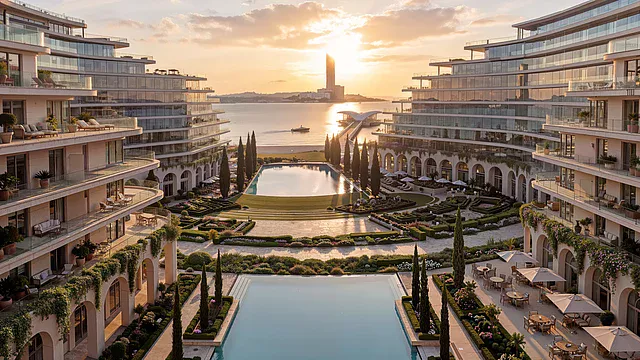
    The announcement, made on February 13, 2026, marks BEYOND’s inaugural venture outside Dubai and introduces a French-inspired waterfront development spanning over 7 million square feet of gross floor area. The project is positioned opposite Wynn Al Marjan Island on one of the emirate’s most strategic beachfront plots.

    Mahdi Amjad, Founder and Executive Chairman of BEYOND Developments, emphasized the significance of the launch:

    “Ras Al Khaimah is witnessing a new phase of development, underpinned by disciplined planning, rising global relevance and the long-term vision of its leadership whose support has been instrumental in enabling our entry into the emirate. EVERMORE stands as a defining milestone in our journey, marking our first expansion outside Dubai and first destination in Ras Al Khaimah.”

    The master plan introduces 250,000 square meters of landscaped open spaces, including a central botanical garden, designed as a fully pedestrian-oriented development. Shaded walkways and green connections link the botanical garden to 3.5 kilometers of accessible beachfront, prioritizing walkability and resident well-being.

    EVERMORE integrates residential, hospitality, and retail components, including 1 million square feet of hospitality and branded residential offerings. The destination features a festival and events plaza, botanical souqs, an F&B village, and a continuous beachfront promenade, forming a self-sustained cultural and leisure district.

    Abdulla Al Abdouli, Group CEO of Marjan, highlighted the project’s importance:

    “As the second-largest master plan within our portfolio, it strengthens Marjan Beach’s evolution as a destination where lifestyle, hospitality, and nature come together to shape the future of the emirate. This master plan adds a meaningful new layer to the beach’s evolution and strengthens its positioning as a global lifestyle and investment destination.”

    The architectural vision draws inspiration from French classical design, reinterpreting proportion, symmetry, and spatial order through a contemporary lens. Cascading buildings are arranged to maximize uninterrupted sea and landscape views, with wind-flow strategies, shaded pathways, dense greenery, and pedestrian bridges ensuring year-round comfort.

    The unveiling took place through an immersive launch experience featuring light installations, layered soundscapes, and theatrical storytelling, translating the spirit of the master plan into a sensory narrative for attendees.

    EVERMORE is designed to contribute meaningfully to the Ras Al Khaimah Vision 2030, aligning with the emirate’s evolving urban and economic development strategy. The project’s scale and positioning reflect growing confidence in Ras Al Khaimah’s real estate investment landscape, as developers increasingly look beyond Dubai’s saturated markets.

  • Dubai Residential Prices Rise 12.1% as Market Records 200,000 Transactions

    Dubai’s property sector concluded 2025 with landmark performance metrics, recording over 200,000 sales transactions—an 18.8% increase over 2024—as both off-plan and ready property segments outperformed previous years, according to a report by Cavendish Maxwell.

    Residential prices rose 12.1% during the year, down from 16.5% growth in 2024, while rental increases moderated to 11-12% by year-end compared to 13-15% earlier in the year, signaling a gradual market stabilization.

    Off-Plan Dominance Intensifies Market Concentration

    Off-plan transactions represented 72.9% of total real estate activity in Dubai, up from 69.3% in 2024, with transaction volumes reaching 146,400 units—a 25% year-on-year increase. This surge was driven by sustained developer confidence and robust investor appetite for future developments.

    Ready property sales recorded more modest but steady growth, reaching 54,400 transactions, up 5% compared to 2024, supported by stable demand from end-users and investors seeking immediate occupancy opportunities.

    The market’s increasing reliance on off-plan sales, however, creates concentration risks, making it potentially vulnerable to shifts in launch momentum and buyer sentiment.

    Supply Dynamics Show Persistent Delivery Gaps

    Approximately 40,400 residential units were completed in 2025, significantly below the initial projection of 82,600 units, resulting in a materialization rate of just 48.9%. Despite falling short of targets, actual completions were 16.4% higher than the 34,700 units delivered in 2024.

    Looking ahead, around 110,500 residential units are projected for delivery in 2026, though historical completion patterns suggest actual deliveries may range between 33,000 and 50,000 units, with some projects likely spilling into 2027.

    Apartments are expected to dominate upcoming completions, representing 84.3% of projected units through 2028. Key locations including Jumeirah Village Circle, Dubai South, Business Bay, Dubai Residence Complex and DAMAC Lagoons are forecast to contribute 30.7% of all projected deliveries during this period.

    Luxury Segment Surges 47% in Transaction Volumes

    Dubai’s luxury real estate segment recorded approximately 2,500 transactions in 2025, marking a 47.1% increase compared to the previous year. Off-plan sales led growth with a 52.6% year-on-year increase, accounting for 70.5% of all luxury transactions.

    The ultra-luxury segment exhibited robust performance with 302 transactions totaling Dh27.9 billion, representing increases of 31.9% in volume and 53.7% in value compared to 2024, highlighting growing preference among high-net-worth individuals for Dubai as both a residential and investment destination.

    Economic Fundamentals Remain Supportive

    Despite emerging supply pressures, broader macroeconomic fundamentals continue supporting the market. UAE GDP growth is projected at 5.2% in 2026, with Dubai expected to expand by 4.5%, supported by ongoing infrastructure investment, population growth, and sustained tourism momentum.

    Tourism is projected to maintain momentum with visitor volumes expected to surpass prior-year levels, while business activity indicators remain positive, providing continued support across housing, retail and commercial sectors.

    Market Enters Transition Phase

    Looking ahead, Dubai’s real estate market is expected to remain relatively stable in 2026, though entering a critical transition phase where supply pressures, moderating growth trajectories and potential external headwinds require heightened vigilance.

    While a sharp correction appears unlikely given Dubai’s solid macroeconomic foundation, diversified economy and sustained population growth, stakeholders should prepare for a more balanced environment characterized by moderate appreciation and heightened selectivity.

    The market’s performance contrasts with record results posted by developers in 2025, suggesting continued confidence in long-term fundamentals despite near-term moderation signals.

  • Emaar Properties Reports Record 2025 Results with Dh80.4 Billion Sales

    Emaar Properties delivered its strongest financial performance to date in 2025, with growth accelerating across all business segments including property development, retail, hospitality, and international operations.

    The Dubai-based developer reported a 16% year-on-year increase in property sales to Dh80.4 billion ($21.9 billion), while total revenue climbed 40% to Dh49.6 billion ($13.5 billion). Net profit before tax rose 36% to Dh25.7 billion ($7 billion), and EBITDA reached Dh25.6 billion ($7 billion), marking a 33% increase from 2024.

    Revenue backlog surged 39% to Dh155 billion ($42.1 billion), providing substantial visibility on future earnings and demonstrating sustained market confidence.

    “Our 2025 results were shaped by a business environment that enables ambition and rewards long-term thinking. The UAE Government and the city of Dubai have created a framework built on stability, clear regulation, and openness to global investment, allowing companies like Emaar to plan with confidence, scale responsibly, and focus on execution,” said Mohamed Alabbar, Emaar founder.

    Domestic Development Drives Growth

    Emaar Development PJSC recorded Dh71.1 billion ($19.4 billion) in UAE property sales, representing a 9% increase from 2024. Revenue from domestic projects reached Dh36.4 billion ($9.9 billion), while net profit before tax grew an impressive 52% to Dh15.5 billion ($4.2 billion).

    The company launched 48 new residential projects throughout the year, including high-profile developments such as Grand Polo Club and Resort, The Valley, and Bristol at Emaar Beachfront. The UAE backlog stood at Dh134.3 billion ($36.6 billion), reflecting strong pre-sales momentum.

    These results align with broader market trends, as Dubai’s property sector continues its upward trajectory with record-breaking transaction volumes.

    International Expansion Accelerates

    International property sales experienced exceptional growth, surging 124% to Dh9.3 billion ($2.5 billion), with revenue of Dh2.6 billion ($0.7 billion) generated across operations in Egypt and India. This expansion demonstrates Emaar’s successful geographic diversification strategy beyond its home market.

    Recurring Revenue Streams Strengthen

    Emaar’s malls and retail leasing revenue increased 13% to Dh6.3 billion ($1.7 billion), maintaining an impressive 98% occupancy rate across its portfolio. The hospitality, leisure, and entertainment segment recorded revenue of Dh4.2 billion ($1.1 billion), up 12%, supported by higher tourism inflows and the addition of three new hotels.

    Combined recurring revenue from malls, hotels, and commercial leasing reached Dh10.5 billion ($2.8 billion), reflecting a 13% increase and strengthening the company’s diversified income base.

    The record performance comes as Dubai’s property market demonstrates exceptional momentum, with investor confidence remaining robust amid favorable regulatory frameworks and economic stability.

    Emaar’s 2025 results reinforce the company’s market leadership position and highlight the sustained appeal of Dubai real estate as a destination for both end-users and investors seeking long-term value in a transparent, well-regulated environment.